
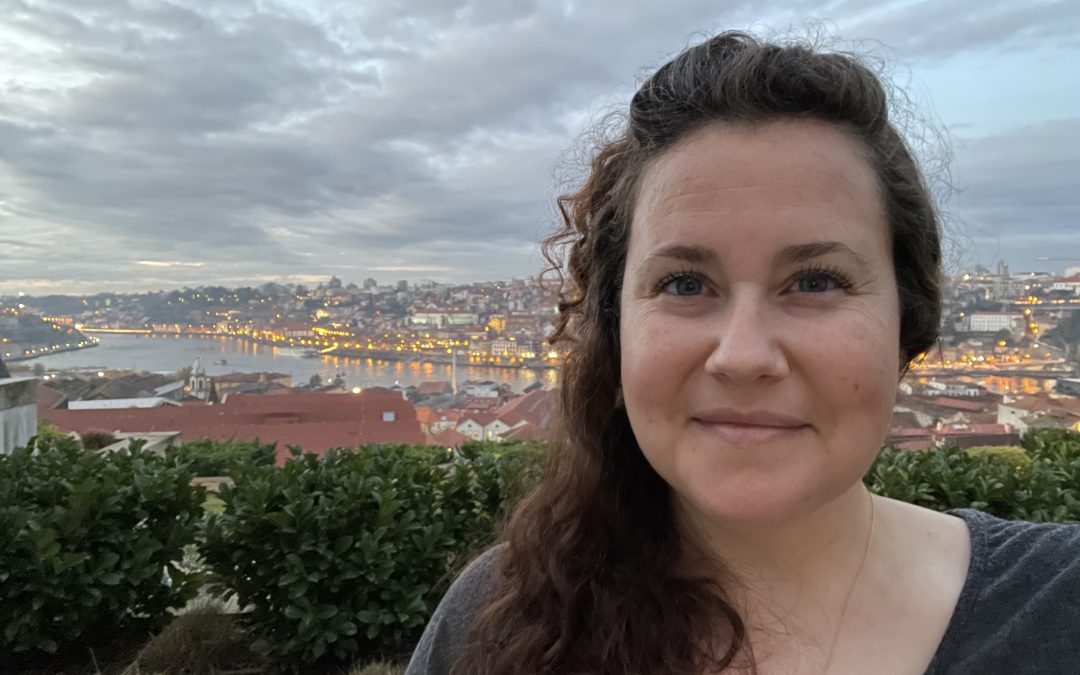
Your journey into wine wasn’t linear. You began in fashion and textile design before moving into wine. What prompted that shift?
It’s a bit of a long story, but cancer is what ultimately led me from fashion and textile design into wine. After a few surgeries and permanent nerve damage, I wasn’t able to continue sewing and designing full time. Around the same time the nerve damage got worse, Covid hit, and for the first time I actually had the time to study wine, something I had always wanted to do but was always too busy.
I dove into wine education, taking courses, having online study and tasting groups, everything I could do to go fully immerse myself. Very quickly, I realized my passion for wine felt a lot like my passion for design. The curiosity, creativity, and constant learning were all still there, just in a different form. Survives on Wine was formed from one chapter of my life unexpectedly closing and another opening in its place. I survive now because of wine, it is my career and my future, it keeps me grounded.
Was wine always present in your life, or did it arrive at a particular moment?
Yes, wine was always present. My father and grandfather were wine lovers. I was very fortunate to grow up in a home with a dreamworthy wine cellar, and a father who shared his love of wine with me. I always knew it would become something more for me, but I just wasn’t there yet in my twenties.
You describe wine and art as interconnected. How do those two disciplines inform each other in your work?
As an artist first and foremost, I view wine as a mixture of art and science. Which is really what art is. Or at least the art that I have always practiced, from fashion design, to quilt design to dyeing and designing wallpapers, there is an underlying science behind the art. When I approach wine, especially from an education point of view, I try to bring in visuals that would help me. I make maps, wine infographics and I even write my wine tasting notes on top of the actual wine I have painted with. It is subconscious really, it just always is at play.
Your visual work, particularly maps and infographics, has a strong educational element. What draws you to translating wine into visual form?
This answer will tie into the previous answer a bit. I am a visual learner, things click in my brain in visual formats. So, what I found was helping me learn was also helping my friends learn. I always lean on a few friends who are my target audience for my work and ask them what sticks in their brain with my visuals. I have it down to a format now that I think works well. Or I hope it does! Also, I don’t need much of an excuse to create visuals!
Is there a particular piece you’ve created that feels especially personal?
https://survivesonwine.substack.com/p/with-mixed-emotions-i-am-sharing It is a very short piece, but hugely personal to me. I don’t often talk about my family.
Was there a moment where something “clicked” in your understanding of wine?
There really wasn’t a moment where understanding clicked if I am honest. Wine was always a part of my life, it all kind of came naturally when I started learning in a deeper way about it. I’ll also just note, chemo brain is a real thing and my memory has gaps these days, so there could have been that moment, but if there was I have no memory of it.
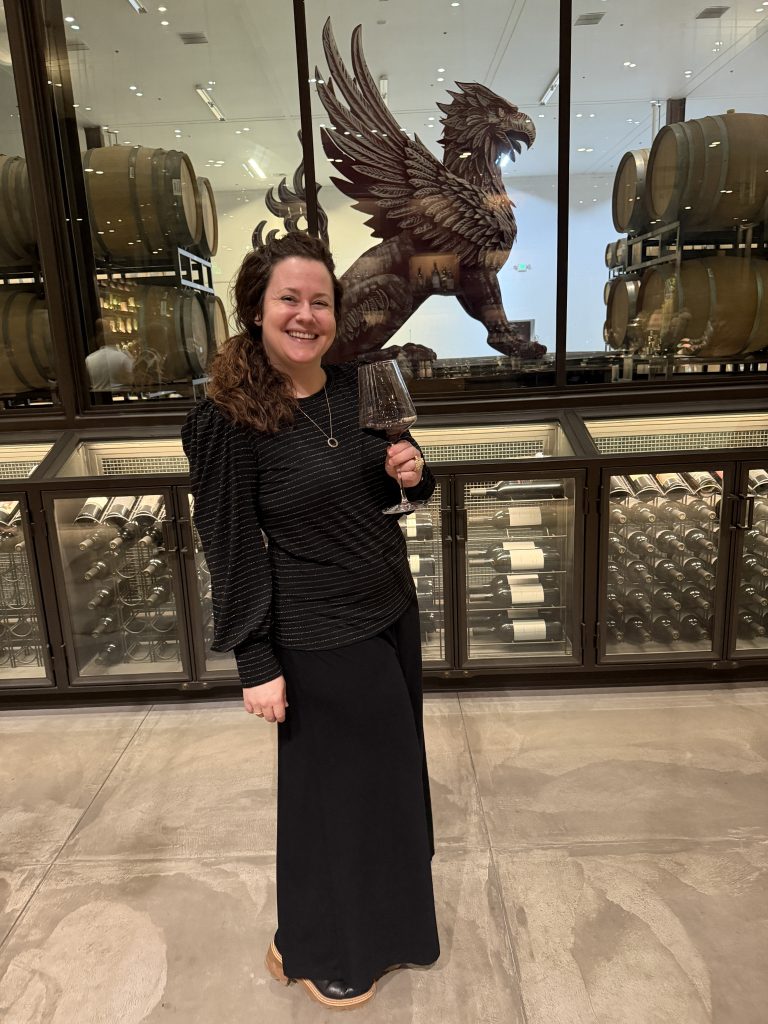
You’ve developed a clear connection with Portugal. What first drew you there?
I was deep into studying WSET Level 3 and originally thought I wanted to pursue Diploma and eventually even the MW. Part of it was passion, but honestly, a lot of it was wanting to prove to myself that I could do it. As I kept studying though, I realized no one will ever truly know everything about wine. There’s simply too much to learn in one lifetime, and staying at that level requires a certain amount of financial freedom. You need to be able to travel constantly and regularly taste wines from all over the world to really keep up.
That started to feel unrealistic to me. I’m not independently wealthy and I don’t have someone funding my wine education and travel. So I realized it made more sense to focus solely on one place and become a specialist instead. Portugal felt like a natural fit around five years ago. There really wasn’t anyone in America focused solely on Portuguese wines, English-speaking tourism was starting to grow, and Portuguese wines were still largely overlooked here. I also genuinely fell in love with the wines, the people, the history, and the culture.
What’s funny is that later I discovered I actually did have a connection to Portugal all along. In the 1490s, my maternal grandfather’s family was forced out of Portugal for being Jewish and fled to northern Africa. I had no idea when I first started focusing on Portugal, which somehow makes it feel even more meaningful now.
Do you think Portugal is still underrepresented in global wine conversations?
I can’t really speak for outside the United States because I don’t have boots on the ground anywhere else. But in America, absolutely, Portuguese wine is still widely misunderstood. I’ve had wine shop managers here in Indiana tell me they don’t want to bring in Portuguese wines because they think there are “no native Portuguese grapes” and that they’re “basically just Spanish wines.” I’ve also heard people dismiss the wines simply because so many of them are blends.
A lot of that comes down to lack of education more than anything else. Even through programs like WSET and Wine Scholar Guild, there’s still a major gap when it comes to Portugal outside of Port wine. That’s a big part of why I do what I do. I genuinely love educating people about Portuguese wines, native grape varieties, winemakers and their histories, and more. Especially now that more English-speaking travelers are discovering Portugal.
What makes a wine experience memorable for you?
I love this question. For me, the setting creates the mood, and I can feel it the minute I walk in. If a place feels overly sterile or too polished, I never fully relax. I want warmth. I want outdoors, feet on the ground, or if I’m inside, worn-in leather chairs and people who feel approachable and genuine.
The wine matters, of course, but it’s not the only thing that shapes the experience. The people and conversations matter just as much. Do the employees seem happy and proud to work there, or exhausted and disconnected? Are the sommeliers and tour guides down to earth, or are they performing? Those little details completely change how a wine experience feels to me.
For it to be memorable, it needs to feel genuine, I need to feel relaxed. It needs to be something that in a year or even three I still remember small details and am still excited to talk about them with others.
How much of what we taste is shaped by what we feel at that moment?
So much of it. I think our mood affects our perception of smell and taste a great deal. If I feel uncomfortable in a situation, or feel intimidated, I get a foul taste in my mouth already, which means no matter how good the wine is, I won’t enjoy it. On the other hand, when I am in a relaxed setting, with kind people serving me, things will always taste better.
Sometimes I think back to my nannying days in the South of France. I used to drink Provence rosé wines at the beach while watching the girls. I thought the wine was just absolutely delicious. Then I would get back home to Philadelphia (where I lived at the time) and buy the same wine and then find I absolutely did not like it. It was dull and bland to me. Now, years later, those memories of the wines in France still live strong, and yet, I absolutely do not enjoy Provence rosé wines if I am not on a beach in the south of France! In France I was beyond relaxed, happy as I think I ever have been, completely in love, enjoying life with people I love. Surrounded by one of the most beautiful places in the world. These things made the wine I was drinking infinitely better.
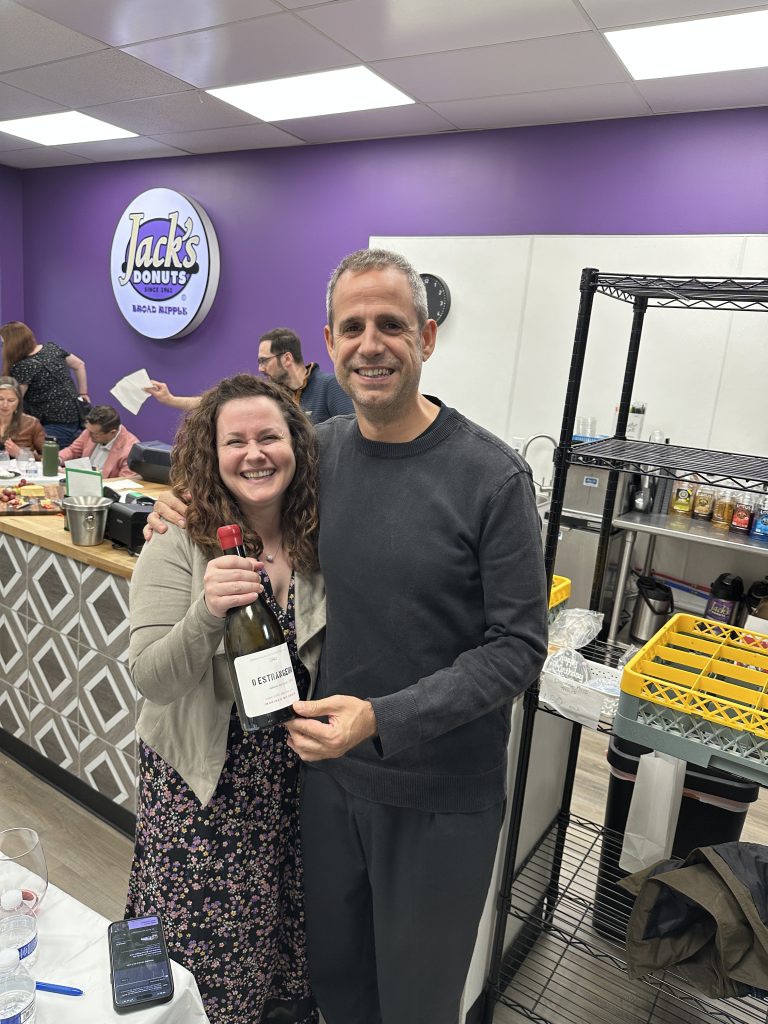
You bring together education, storytelling, and creativity. How would you describe your voice in the wine space?
This is a hard one, having to describe my own voice in the wine space. I hope I bring a refreshing, passionate, thoughtful and curious voice, sometimes a little snarky, always truthful. I never want to intimidate, but I always want honesty. I want to spark interest, for someone to read or see my visuals and want to immediately take a closer look, or send me a message.
What do you think is missing in wine communication today?
I wrote about this recently. https://survivesonwine.substack.com/p/who-are-wine-tasting-notes-actually
There is a lack of reality in a lot of wine writing. Wine writers can end up living in a bit of a bubble, completely disconnected from how most people actually buy and experience wine. They receive samples, attend trade tastings, and go on press trips, which absolutely has value when it comes to learning about producers and regions. But it can also create distance from the average consumer.
Most wine drinkers are not flying to Europe for tastings or spending hours studying soil types. They are buying wine at grocery stores, Costco, local wine shops, or grabbing a bottle while running errands after work. Their relationship with wine looks very different, and I think the industry forgets that sometimes.
Do you see yourself focusing more on writing, art, education, or a combination of all three?
I want to continue focusing on all three. My goal in the next few years is to be in Portugal full time. I would love to teach wine classes, host art and wine events and continue writing about the wineries, vineyard workers, and winemakers that inspire me. I think that all three are extremely important in how I communicate wine with others, but also for me to stay passionate about it.
If someone encounters wine for the first time through your work, what would you want them to feel?
I would want them to feel like they belong. That what I write resonates with them. For them to feel comfortable reaching out to me with questions and that they can trust what I write.
