
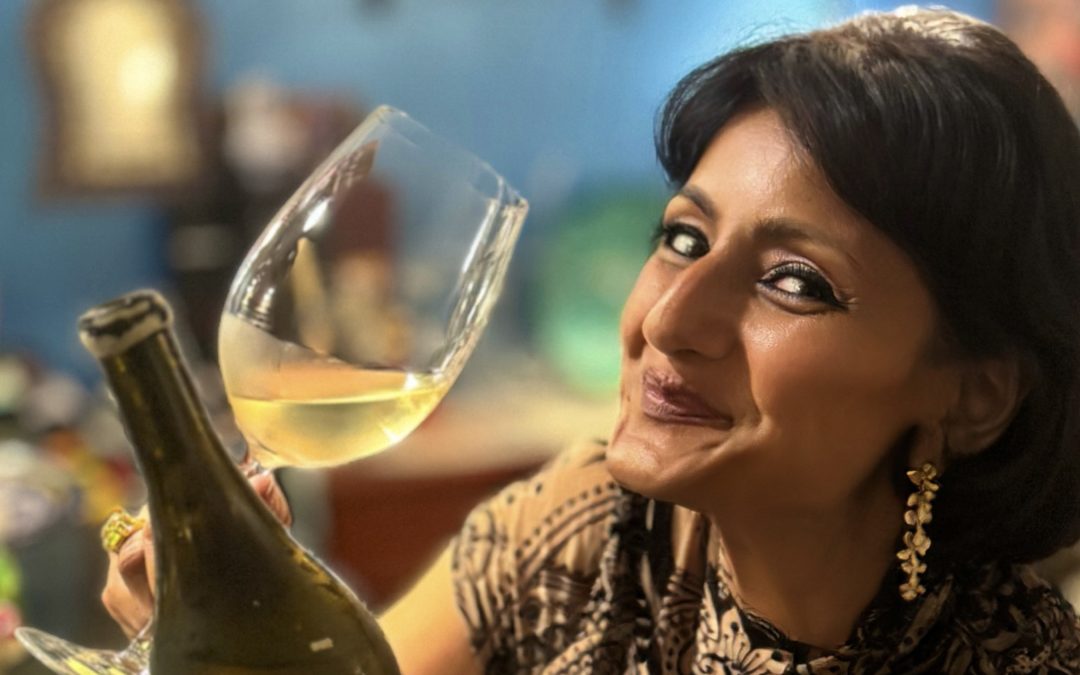
Nalini Mani is a Washington, DC-based I/O psychologist and organisational transformation professional, currently exploring her next role, ideally one that continues to support her passion for wine. Though not a wine industry insider, she is a certified enthusiast driven by curiosity and a deep love of learning. She studies, travels, collects, and shares wine with both academic interest and personal connection.
She hosts community tastings for causes she supports and documents her experiences through wine on her Instagram platform, @tanninsandtruth, where she explores how wine reflects her own human, emotional, and evolving story.
You describe your path into wine as being driven by a deep love of learning rather than a traditional industry route. How did that journey begin?
It really began with curiosity, not ambition. I wasn’t someone who came up through restaurants or vineyards or retail. My entry point was much earlier, as a teenager at the family table. We were a global family, and a sip of whatever my mother was drinking wasn’t unusual. She loved her German and Austrian Rieslings and her Gewürztraminers. She didn’t “know” wine in any formal sense, but she absolutely knew what she liked.
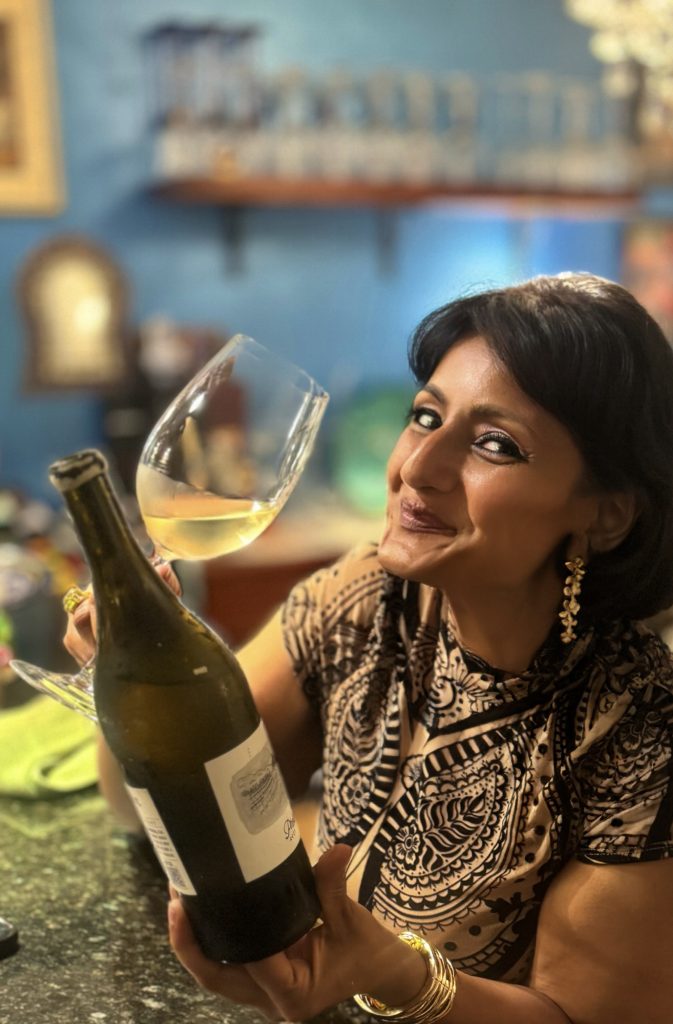
My father was the opposite. Single malts and lagers were his world. He didn’t know the technicalities of wine, but he respected it and served it. I still remember him telling me, at fourteen, that if I ever wanted a reliable, budget-friendly glass of Champagne and didn’t know what to pick, I could never go wrong with Veuve Clicquot, “the grande dame,” he said. I had no idea what that meant, but I felt very grown up hearing it.
So of course, when I went off to college, I did what any self-respecting child of wine-entertaining parents would do. I quietly slipped bottles from his cellar into my suitcase. Through my twenties, I was just a wine drinker, the classic Chardonnay and Cabernet-Merlot starter kit, with the occasional Bordeaux or Chianti making an appearance.
But even then, something tugged at me. I lingered over the elegance, the way I felt when I was sipping it.
Work and travel expanded everything. Suddenly I was in different cities, eating in unfamiliar places, pairing food and wine without even realising that’s what I was doing. I visited vineyards simply because I enjoyed them, but I paid attention. To how winemakers talked about their work. To the way their expressions changed when they described a vintage. To the pride, or vulnerability, in their voice when a season challenged them or a score felt unfair.
Those moments stayed with me. They stirred something I didn’t yet have language for.
By around 2009, the seed had taken root. I realised I didn’t just want to drink wine, I wanted to understand it. And that impulse came from the same place that drives me professionally. A love of learning, of decoding systems, of understanding how structure and culture shape outcomes.
Wine mirrors that. It is structure and soul. Choices and consequences. Culture you can taste. So my journey didn’t begin with a single epiphany. It began with noticing. Noticing pleasure, patterns, and that wine holds layers of history, geography, and human expression. Once I noticed, I couldn’t look away.
Was there a specific moment when wine became more than just something you enjoyed?
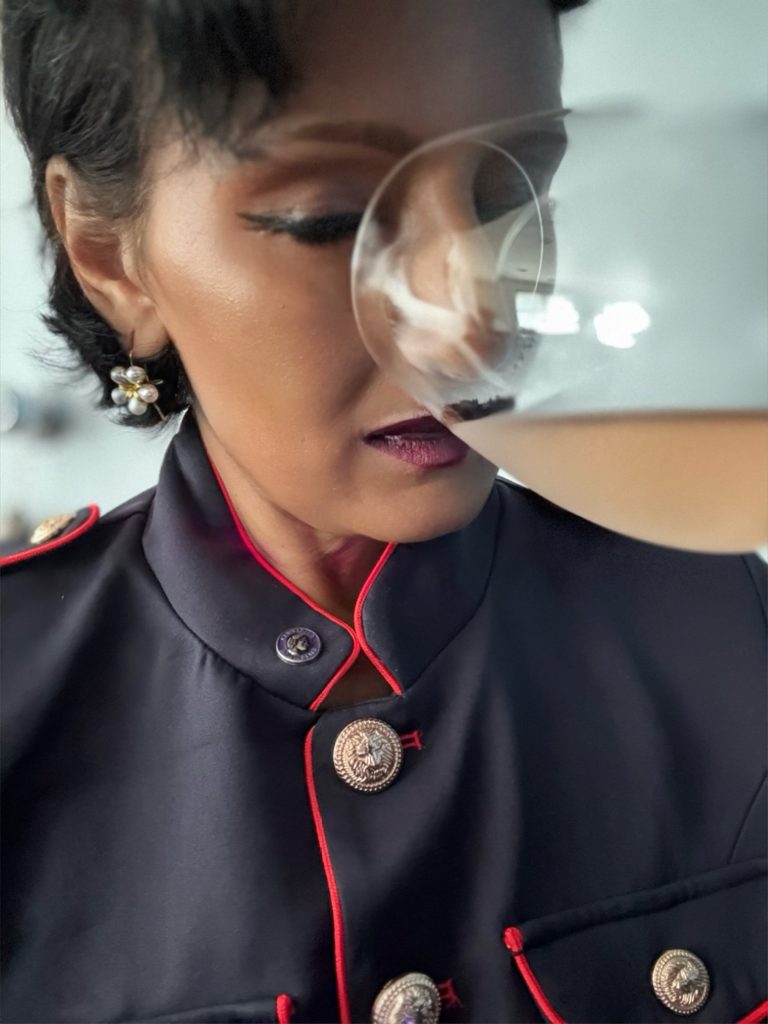
I remember the exact moment. 2001. Even now, writing this brings tears to my eyes in the best way. It was a year of so many firsts for me, the kind of year where you suddenly realise you’re doing things on your own for the first time and you’re both terrified and exhilarated by it.
It was also the first time I ever took myself out to dinner alone, at Roberto Donna’s Galileo in DC. I felt exposed, unsure, and strangely powerful all at once. The wine was a 1997 Pio Cesare Barolo. The sommelier recommended it, and I simply said yes.
I didn’t know what I was stepping into, but the moment I tasted it, something shifted. It wasn’t just delicious. It felt like it was speaking directly to everything I was feeling in that moment. The loneliness, the freedom, the quiet pride of making decisions for myself.
This wine was telling my story in that moment. It stopped me in my tracks. I sat with it. I savoured it. I ordered two bottles with money I really didn’t have. I left delightfully tipsy, and for a little while, I forgot my worries. That wine held me in a way I didn’t expect.
That moment stayed with me. So much so that the very first time I made it to Piedmont, I went straight to Pio Cesare. I met the late Pio Boffa, a memory I still treasure, and that visit cemented something for me. Their wines became more than bottles; they became part of my story.
I was genuinely saddened when he passed. Today, I still celebrate their wines not just because they are exceptionally good, but because I love seeing a woman at the helm now. There is something beautifully full circle about that.
So yes, there was a moment. A very specific one. The first time a wine didn’t just taste good, it felt like it was telling me a story I already knew but had never heard spoken aloud. That is when wine became more than enjoyment. It became a language.
What drew you to pursue formal certifications purely out of passion?
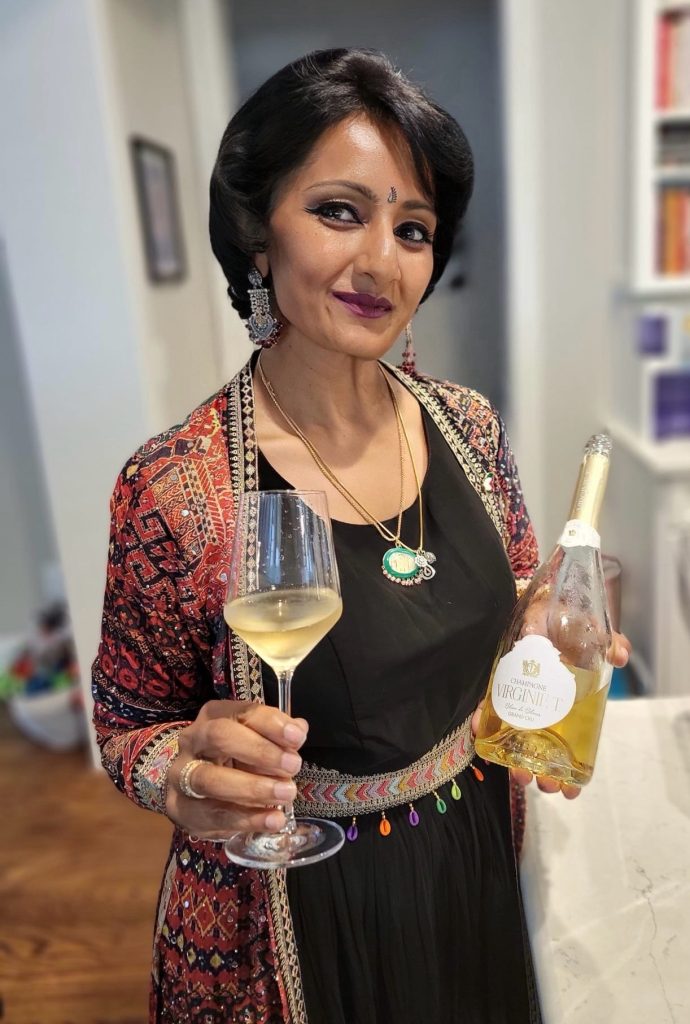
By the time I reached the point of considering certifications, the curiosity that started my journey had already taken root. I wasn’t chasing a job title or trying to break into the industry. I was chasing the same feeling that first pulled me in, that sense of noticing, of wanting to understand why a wine could stop me in my tracks.
Studying formally gave structure to that curiosity. It gave me a framework for everything I had been absorbing instinctively for years. Certifications were not about proving anything to anyone. They were about feeding the part of me that likes to learn. Wine mirrors my professional life in that way. It is structure and soul, choices and consequences.
Yes, I felt like an outsider, and in many ways I still do. I am not in the industry, and I have never pretended to be. For a long time, that made me shrink a little. I would go to tastings or sit in certification classes surrounded by people who lived and breathed the industry, and I would feel tongue-tied. It took years to grow out of that.
Eventually, I stopped caring. I was not trying to become an insider. I never wanted to be part of an exclusive club. That freedom became a strength. It kept me from absorbing the gatekeeping and performative seriousness that sometimes creeps into the wine world. I am about wine being fun. Wine being emotion. Wine being life. I want anyone who sips with me to feel that.
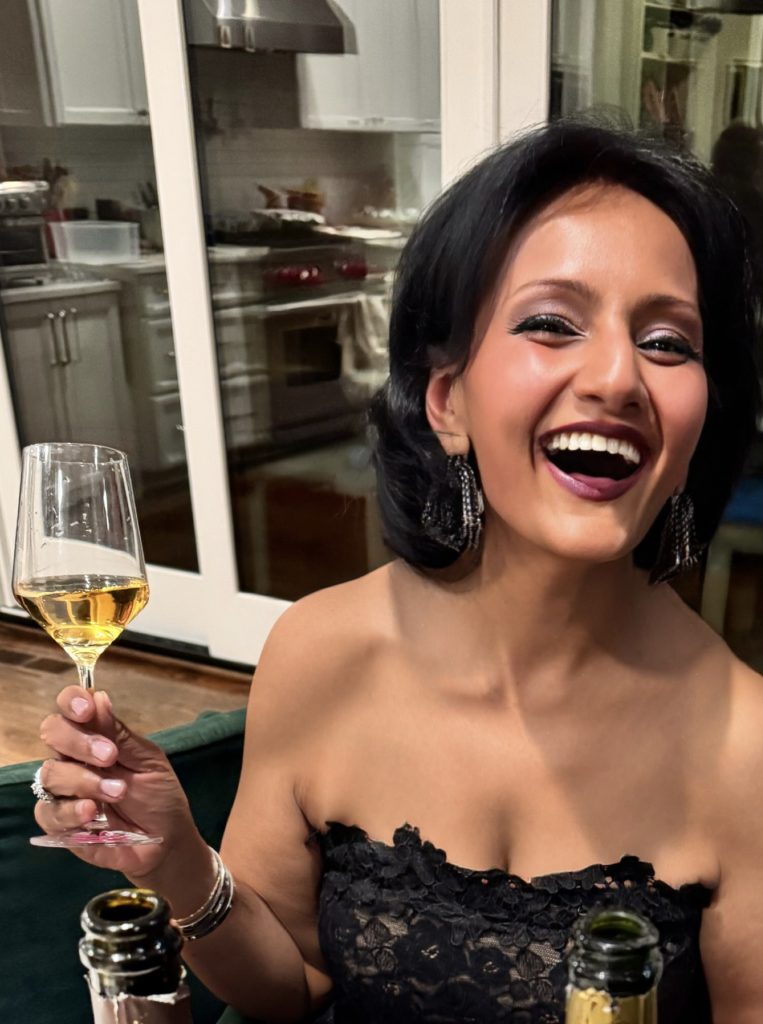
You mention that wine has become a language for you. What does that mean in practical terms?
When I say wine has become a language for me, I do not mean it dominates every conversation. It is more like a thread that runs through my life. It is in the way my friends and I sip together, how we try new things, how we are open to unexpected bottles. We might describe a wine briefly, then immediately fall into laughter and conversation. The wine is there, shaping the moment, but never demanding to be the focus.
That is the language. It is present, expressive, but not loud. Over time, wine became a way for me to interpret emotions, memories, even people. Now it shows up in my writing. I can translate a wine into a feeling, a moment, a personality. It is how I understand the world, and how I share pieces of myself.
How do you translate something as sensory and personal as wine into words?
By focusing on the experience rather than a checklist. I am not sitting there thinking blackberry, cedar, medium-plus acidity. I may run through that instinctively, but it is not how I write. I write how the wine feels. What it reminds me of. How it shapes the moment. Sometimes a wine feels like a conversation, or a season of life, or a person. That is what I try to capture. It is not about technical perfection. It is about emotional truth.
Has your writing style evolved as your knowledge has deepened?
My wine writing is new. I only really leaned into it in 2025, when I started writing again and a friend said, “You talk about wine the way you write, so write about wine.” That was the push.
More generally, as my knowledge on anything has deepened, my writing has shifted, but not in the way people might expect. Wine is no different. I do not write to sound technical or authoritative. I write to connect.
That has always been my way. And the more I have learned, in wine and in life, the more I have realised that clarity is far more powerful than complexity. I do not need to impress anyone with jargon. I am trying to capture the feeling of a wine, the way it threads into life with friends and family. I want someone reading my words to feel invited in, not pushed out.
So yes, my writing has evolved. It has become clearer, more intentional, more rooted in emotion than in performance. It is me translating what wine means in my world into something honest and human.
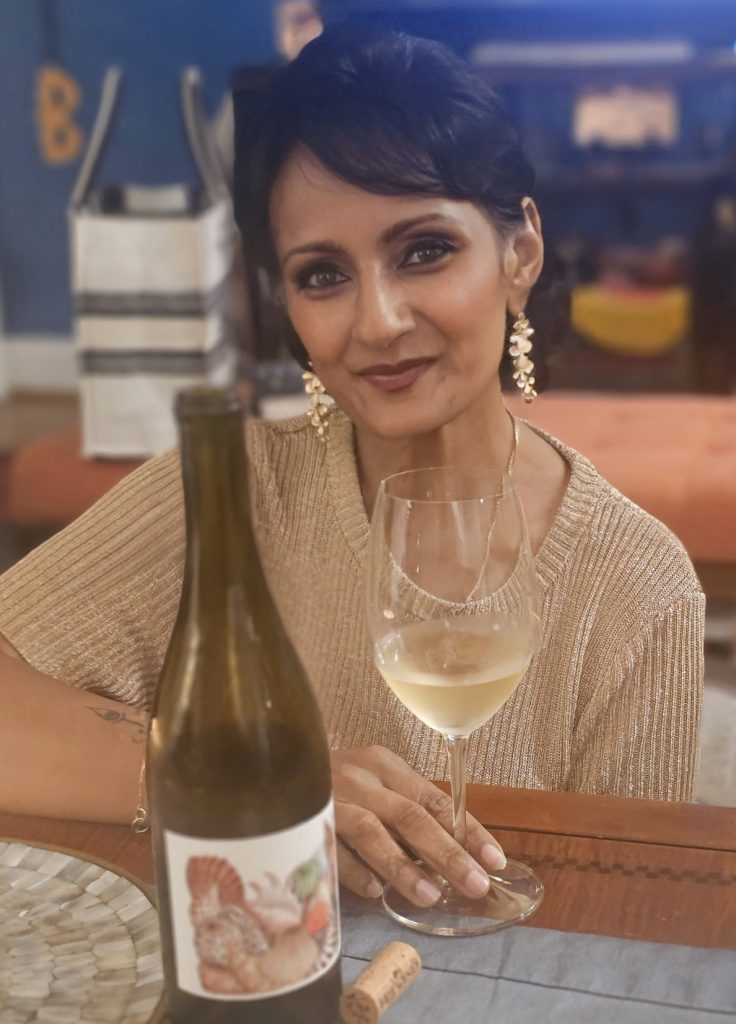
You approach wine as art, science, and culture. Which resonates most strongly with you today?
Today, it is the art that resonates most. Science can tell me how a wine became what it is, but art tells me why it matters. The intention, the emotion, the expression behind it. That is the part that feels most alive to me now. The cultural element sits alongside it. I felt that recently when I led a fundraiser tasting. I made it blindfolded, all of us, including me, because science teaches us how easily sight can distort perception. I wanted people to taste without assumptions.
To deepen the experience, I paired the wines with herbs and florals picked from a community farm on my street. There was a solo viola playing softly in the background. People smelled the herbs, sipped the wine, and memories surfaced. Childhood fields, travels, family kitchens, places they had not thought about in years.
One person said it reminded them of running through fields as a child at their grandmother’s home in Saignon, of rosemary bread, of herbs like sage, and suddenly they were thinking about roast chicken. That is when I said, now you will always know what garrigue means.
When aroma connects to memory, it becomes permanent. That intersection, where art, culture, and science meet, is what speaks to me now. Science gives structure, culture gives context, but art gives meaning.
How did structured learning shape the way you taste and interpret wine?
Structured learning gave me a framework. Before, everything was instinct. I tasted by feeling, and I still do. That has not changed. What study did was sharpen that instinct. It gave it structure. It helped me understand why something resonated without losing the emotional side of it.
Is there a tension between technical knowledge and emotional response, or do they work together?
They work together. Technical knowledge gives me the “how”. The structure, the vocabulary, the things I can analyse. Emotion gives me the “why”. The reason the wine matters. Without emotion, wine feels sterile. Without knowledge, it becomes vague. The real interest lies in the interplay between the two.
You speak about making wine accessible without stripping away its soul. How do you strike that balance?
For me, it is like inviting someone into my living room. I am not industry, and I am not trying to be overly technical. I am simply sharing something I love. If someone says they hate Chardonnay or only drink sweet reds, I do not push back. I meet them where they are and gently open the door to something new.I keep the language simple, but I do not dilute the wine itself. I translate rather than simplify. Accessibility is about making the space welcoming, not reducing the substance.
What do you think is currently missing in the way wine is communicated?
Joy. That is what is missing. So much of wine communication is about being correct or impressive, and not enough is about the pleasure of discovery. Wine should make people smile.
I have described a rosé as “Botox in a glass” before, and I will use that again because it makes people laugh and engage. Or describing texture as something polished and confident, tied to a real moment in life. That kind of communication feels human. Wine does not need to sound like a textbook. It needs personality, humour, and memory. It needs to feel alive.
You describe wine as joy, as a moment in life. What does a perfect wine moment look like for you?
A perfect wine moment is simple. It is laughter, a sense of calm, a moment where everything feels aligned. The wine, the people, the place, the timing. It is unforced. The wine folds into the moment rather than dominating it. That sense of alignment, even briefly, is what makes it perfect.
Do you think the wine world sometimes forgets that sense of enjoyment?
Often. The conversation can become too focused on expertise and correctness, and people forget that most drinkers simply want to feel something. Younger audiences in particular want a story, something real. They are less interested in chemical breakdowns and more interested in why the wine matters. Wine communication sometimes leans too far into precision and not enough into curiosity. Enjoyment is not secondary. It is the entire point.
How important is context, people, place, timing, in shaping how a wine is experienced?
It is everything. Wine never exists in isolation. The people, the setting, and the moment all shape the experience. The same bottle can taste completely different depending on what is happening in your life at that time. Context is the invisible ingredient that turns a sip into something meaningful.
You mentioned contributing your expertise to causes you care about. How does wine intersect with that part of your life?
For me, wine is a way to contribute. I am not in the industry, and I do not approach it commercially. I use it to support community events and causes I care about. Wine becomes a tool for connection. It brings people together and creates shared experiences that can be directed towards something meaningful.
What does being part of a community like IWMA mean to you?
It represents a space where different perspectives can come together.
A place with both rigour and warmth. Where curiosity is welcomed and people can learn from one another. It feels like being part of a collective that is shaping how wine is communicated in the future, but doing so in an open and inclusive way.
If someone is just beginning their journey into wine, what would you want them to feel rather than understand?
Wonder. I would want them to feel invited, not intimidated. Free to explore, to laugh, to be curious. Wine should feel accessible, expressive, and enjoyable. Something they can engage with without needing permission or expertise. It should feel like a world they can step into freely.
